
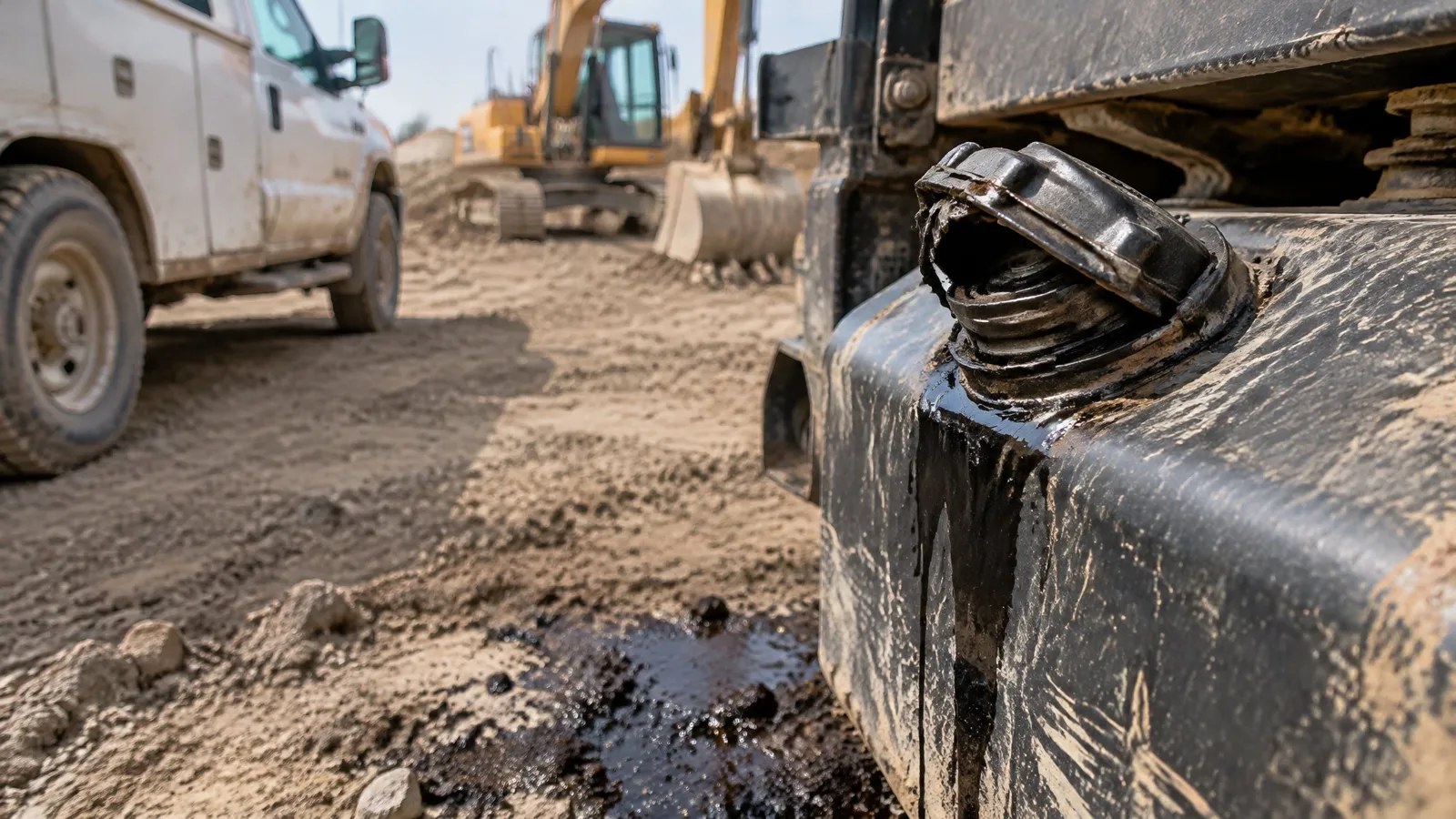
Illustration for this story, not a photo of the incident.
Quick answer
A FuelGo roundup published October 12, 2026 put the U.S. average diesel price at $6.199 a gallon for the week of October 5 — $2.49 higher than a year earlier, citing the U.S. EIA — and pointed to repeat thefts at B.C. contractors, a county truck with drilled tanks in Texas, and organized rings in California and Florida. The earliest warning signs are in fuel logs; the physical clue is a pried or cut cap.
The 2026 Picture
FuelGo’s point is simple: diesel is easy to sell, has no serial number and can’t be traced once it’s in someone else’s tank. Anywhere fuel sits unattended overnight — a job site, a fleet yard, an RV storage lot — is worth a thief’s time.
- Price: $6.199 per gallon U.S. average diesel for the week of October 5, 2026, up $2.49 year over year (EIA, via FuelGo).
- British Columbia: one contractor hit four times in three weeks as Vancouver-area diesel rose about 42% (Vancouver Sun).
- Texas: police followed a trail of spilled diesel from a county truck with drilled tanks to a suspect’s home (KWKT FOX 44, via FuelGo).
- California and Florida: trade press reported organized rings targeting fuel pumps (Transport Topics, via FuelGo).
Warning Signs Hiding in Your Numbers
- Fuel use per engine hour or per mile creeping up with no change in workload.
- Vehicles or machines starting the morning with less fuel than they were parked with.
- Storage tanks dropping faster than logged draws.
- Logged fills larger than the tank, or fills on units that were down or off site.
- Fuel moving at night or on weekends.
- Deliveries where the gauge rose less than the ticket shows.
- Physical evidence: pried or cut caps and locks, drill holes, diesel stains or smell on the ground.
Don’t Forget the Trucks — and the RV in the Yard
Most job-site advice focuses on excavators and bulk tanks. But the pickups, service bodies and chassis cabs parked beside them carry fuel too, and their fuel doors open with a push. FuelGo notes that anti-siphon screens stop a hose but not a drill, and B.C. contractors told the Vancouver Sun that thieves mutilate locking mechanisms on caps.
The same applies to a motorhome parked at a storage lot or on a rural property. A bolt-on locking fuel door closes off the entire filler, leaving no cap to pry and no open neck for a hose.
A Four-Layer Plan
- Lock it: secure fuel access on every vehicle and machine — on trucks and RVs, a locking fuel door over the filler. Lock pump cabinets and cut pump power after hours.
- Light and watch it: one controlled entry, motion lighting, cameras aimed at fuel sides, and vehicles parked tight with fill points facing in.
- Log it: record every fill by unit and hour meter or odometer, reconcile weekly, and give each person their own fuel code.
- Keep less on hand: size tanks to a few days’ use and avoid leaving everything full over weekends.
If Fuel Is Stolen
- Check for leaks and contain any spill — a drilled tank keeps leaking.
- Find out whether the spill must be reported to environmental authorities.
- Document damage, gauge readings, logs and video.
- Report to police and your insurer, and confirm whether your policy covers fuel.
- Close the gap that let it happen.
Key Takeaways
- U.S. diesel averaged $6.199/gal in early October 2026, up $2.49 in a year (EIA via FuelGo).
- Reported 2026 cases span British Columbia, Texas, California and Florida.
- Fuel logs catch theft first; pried caps are the physical clue.
- Lock, light, log and keep less fuel on hand.
Frequently Asked Questions
Why is fuel theft rising in 2026?
Diesel is worth more. FuelGo, citing the U.S. EIA, reported an average of $6.199 a gallon for the week of October 5, 2026, $2.49 above a year earlier. Diesel is untraceable once it is in another tank.
What are the warning signs of fuel theft?
Rising fuel use with no change in work, vehicles starting the day lower than they were parked, tanks dropping faster than logged draws, fuel moving at night or on weekends, and pried caps, drill holes or diesel stains on the ground.
Do locking caps stop fuel theft?
They slow thieves down, but pried or cut caps are one of the most common signs of theft. A locking fuel door covers the whole filler so there is no exposed cap to attack.
Take the Cap Out of Reach
THE FUEL VAULT™ is a bolt-on locking fuel door that covers your exposed fuel cap behind a keyed, armored door. No drilling, installs with hand tools, Limited Lifetime Warranty, made in Sarasota, Florida. Questions? Call 941-732-0452.
Sources
- FuelGo, “Construction Site Fuel Theft: How It Happens and How to Stop It” (opens in a new tab), October 12, 2026. Cites the U.S. EIA, Vancouver Sun, KWKT FOX 44 and Transport Topics.
- Vancouver Sun, “As diesel prices climb, thieves siphon fuel from B.C. construction sites” (opens in a new tab), September 25, 2026.
Summarized and rewritten by Fuel Vault from the reports above. Anyone arrested or charged is presumed innocent unless proven guilty in court.